IFMacao 2024 Keynote Speakers

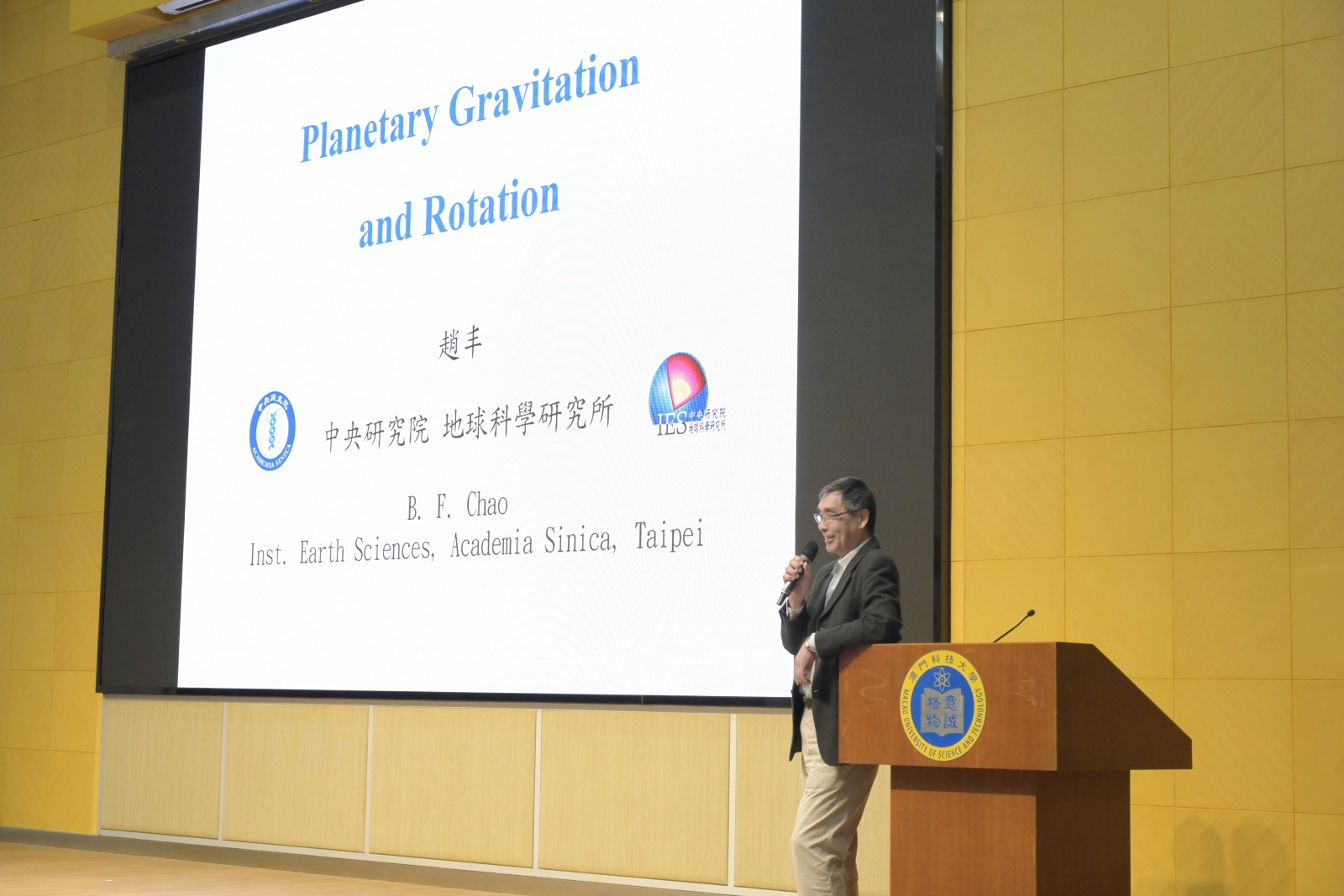
趙丰/Chao, Benjamin Fong
My scientific interests lie primarily in global geophysics using space-geodetic and seismological observational data; they pertain to a broad range of geophysical areas listed below in the order of effort over the years (in a majority of cases collaborating with colleagues and students):
(1) Earth rotation and low-degree gravitational variations: We studied the geophysical excitations of the length-of-day variations, the polar motion, as well as the Earth’s oblateness (J2) changes (e.g. the 1998 anomaly) due to surface geophysical fluids (atmosphere, ocean, land hydrology, cryosphere, in association with ENSO and other climatic fluctuations), tidal influences, core fluid motion, and co-seismic deformations. For the latter we developed the calculation method using normal-mode summation. We also extended such studies to understand the rotation and gravity of Mars and its two satellites.
(2) Earth’s rotational normal modes: I derived mathematical (convolution) expressions for the excitation of a rotational normal mode in a spinning reference frame (such as the Earth), and applied them to the Chandler wobble and the free-core nutation (e.g. to determine their natural frequencies and Q-values). I derived (multipole) expressions for the mantle-inner core gravitational torques, and delineated their connection to the inner-core libration and inner-core wobble. We found a 6-year in variation the Length-of-day relating to the inner-core libration, which in turn creates a 6-year westward propagating wave-2 rotary motion manifested in the GPS, geomagnetic, and global gravity observations.
(3) Harmonic analysis method: I developed the autoregressive (AR) estimation method in the frequency domain for determining the complex frequency (frequency and Q) of a free oscillation, and further extended it to form a highly sensitive and high-resolution AR-z spectrum. We successfully applied them to the detection and analyses of Earth’s free oscillations, tidal and other harmonic signals in various rotational and gravitational phenomena.
(4) We explored with the utility of empirical orthogonal function (EOF) and wavelet spectrum to study time-variable gravity from the GRACE satellite and ocean radar altimetry observations, particularly for oceanographic phenomena (e.g. Antarctica Circum-polar Current and the Argentine gyre).
(5) I studied the anthropogenic effects of water impoundment of reservoirs on global geophysics, particularly for sea level variation.
(6) I have written numerous general Earth-scientific articles featured in AGU’s EOS, as well as for popular-science magazines (in Chinese) in Taiwan and China.

Joseph Michalski
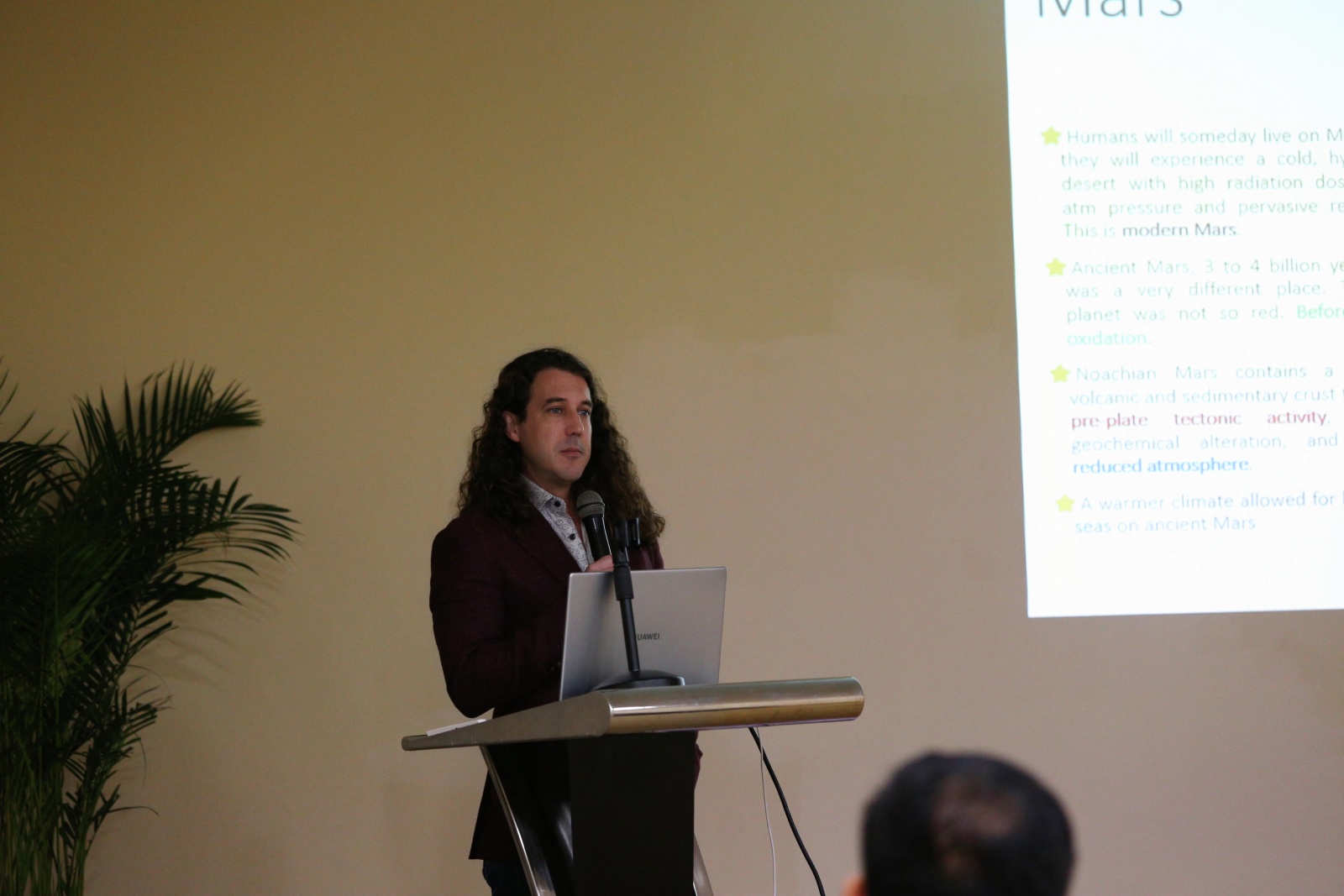
I have 20 years experience in remote sensing and space exploration. My research and expertise are primarily focused on mineral exploration using remote sensing techniques. Using this approach, we can explore the geology of distant worlds, such as Mars or other planets. Likewise, we can search in remote or complex parts of the Earth for mineral resources or turn the tremendous power of remote sensing toward environmental problems.
I am available for consulting on projects involving remote sensing and exploration.
I am equally passionate about the science of exploration and the communication of science. The key, for me, is to understand how one can connect science with a person's unique perspective, to his or her existing framework of knowledge. I believe that everyone has a deep curiosity about the universe around them, but it not everyone knows where that curiosity lives; as teachers and explorers, we can use science to identify and stimulate that curiosity.

Zong Qiugang
Professor Zong Qiugang obtained his Bachelor's degree in Physics from Sichuan University in 1986. In the same year, he became an Assistant Researcher at the Institute of Space Physics of the Chinese Academy of Sciences (now the National Space Center of the Chinese Academy of Sciences). In September 1989, he joined the Chinese Antarctic Expedition Team. He studied in Germany in 1994 and obtained his Ph.D. degree from Max Planck Institute for Solar System Research/Technical University of Braunschweig, Germany in January 1999. He has worked at the Max Planck Institute for Solar System Research, the Space Physics Center at Boston University, the University of Massachusetts Lowell, and the School of Earth and Space Sciences at Peking University. He has made outstanding contributions in the field of space science and space exploration, publishing over 300 SCI papers and receiving more than 12,000 citations, as well as holding 28 domestic and international patents.
Under Professor Zong's leadership, his team developed a new generation of energy neutral atom imaging instruments with ultra-high spatial and temporal resolution. They also successfully developed an array energy electron detector with international leading level. The instruments developed have been installed on 11 satellites, including the BeiDou Navigation Satellite System, Fengyun satellites, and the Macau Science Satellite "MacaoSAT-1." These instruments have achieved on-site measurements of the dynamic variations of the "killer electrons" in the Earth's radiation belts. By utilizing autonomous data, a predictive model for "killer electrons" has been developed and incorporated into the standard forecasting model of the National Space Weather Forecast Center.
Professor Zong's innovative achievements have been widely recognized in the international academic community. He has received the Second Prize of the National Natural Science Award, the 2020 Hannes Alfvén Medal from the European Geosciences Union (the first Asian scholar to receive this award), the Outstanding Scientist Award from the International Association of Geomagnetism and Aeronomy (the first Asian scholar to receive this award in 2021), and the Vikram A. Sarabhai Gold Medal from the International Astronautical Federation in 2018, among others. He has served as the Chair of the Atmospheric and Oceanic Sciences section of the Asia Oceania Geosciences Society (AOGS) and is currently the Editor-in-Chief, Associate Editor, or Editorial Board member of six international journals, including JGR-Space Physics published by the American Geophysical Union (AGU).
IFMacao 2024 Outputs